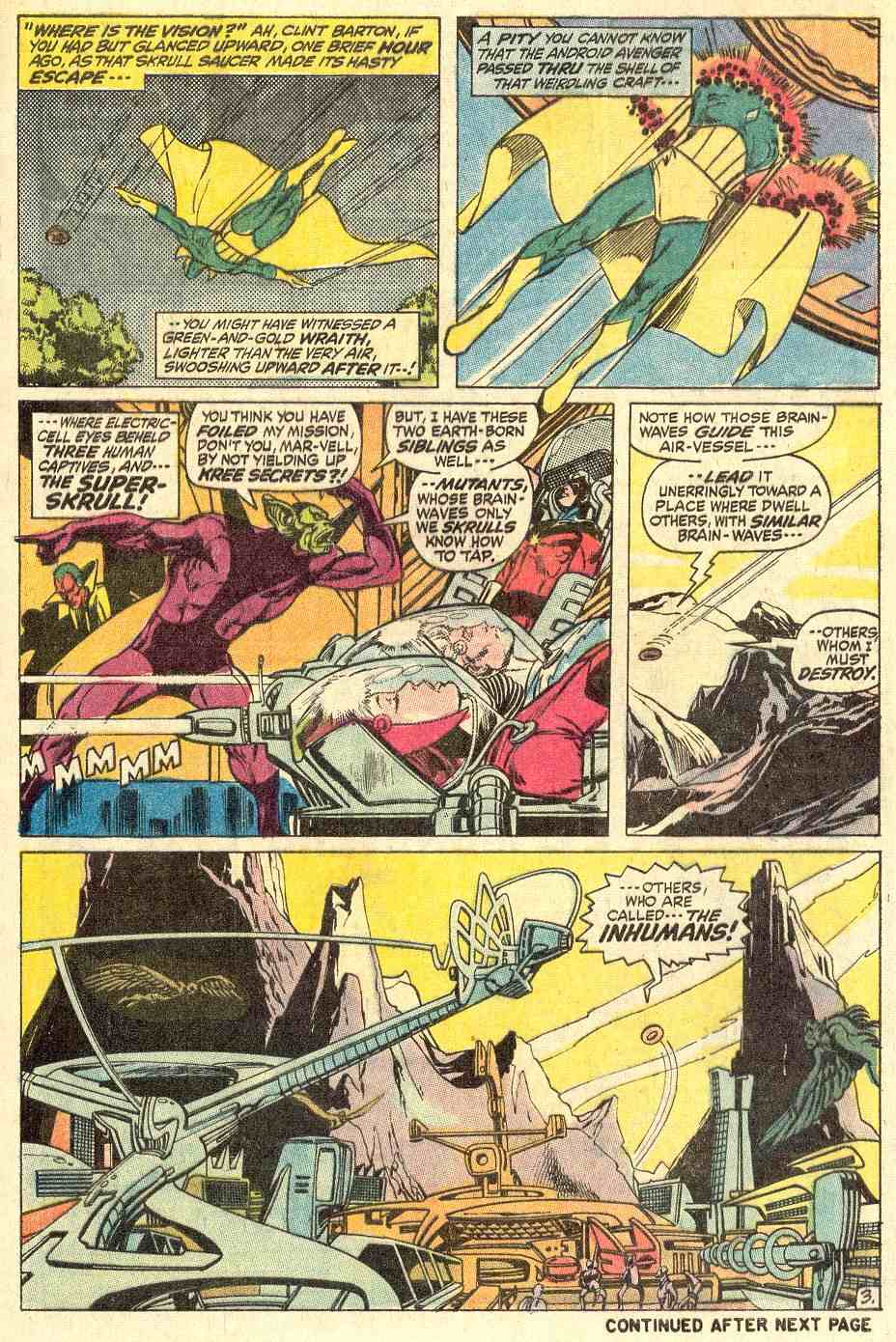
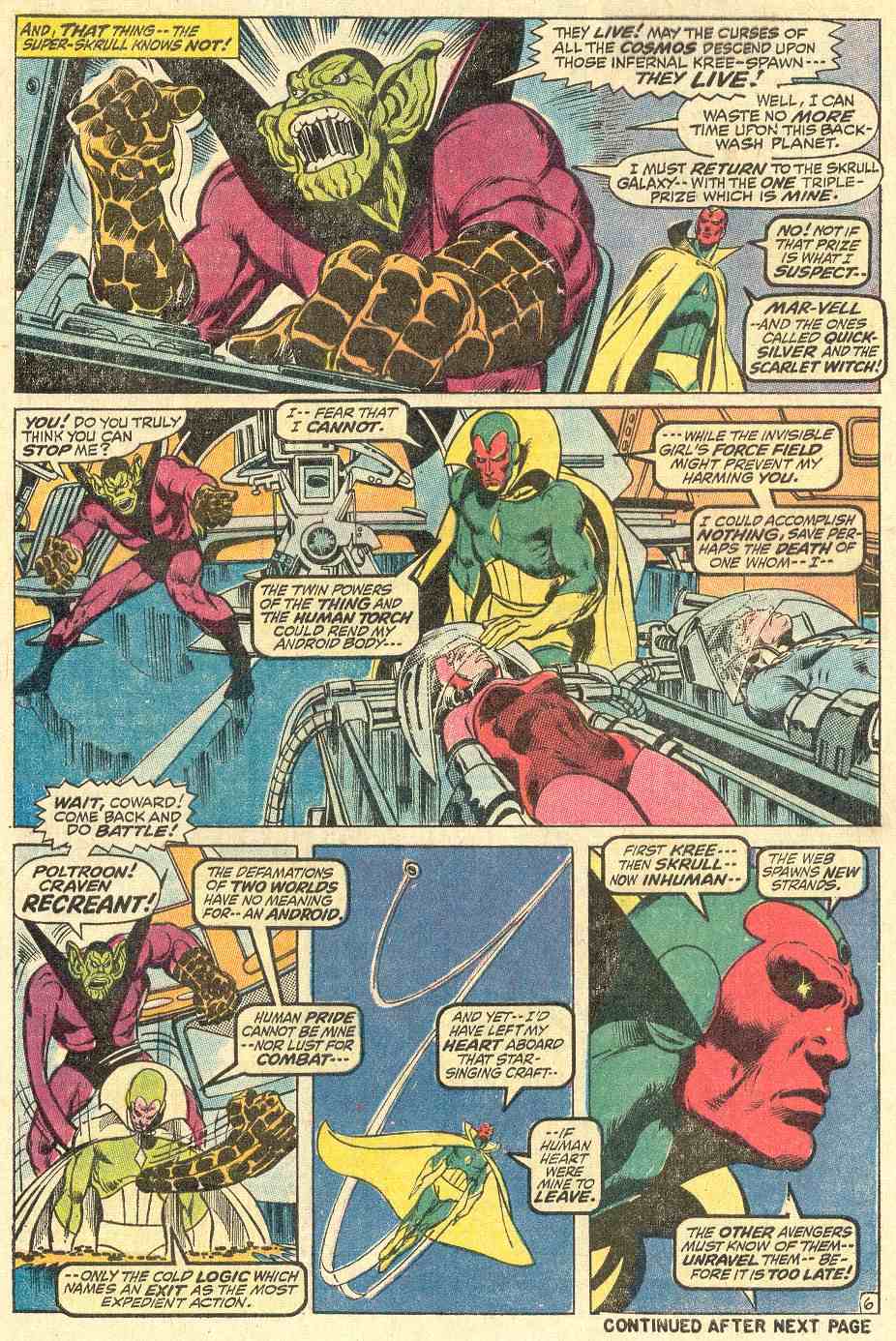
Download Avengers #95
"When billionaire industrialist Tony Stark dons sophisticated steel-mesh armor of his own design, he becomes a living high-tech weapon—the world's greatest human fighting machine," explained one issue of The Invincible Iron Man. And thus it's been, with some exceptions, for nearly fifty years. One of the most trouble-ridden heroes of the Silver Age, Iron Man first appeared in Marvel's Tales of Suspense #39 (March 1963). Another of Stan Lee's many
 inventions, his early adventures were written by Larry Lieber, drawn by Don Heck. Tony Stark, then only a multimillionaire, was not a true superhero. But he gained an incredible array of abilities by putting on "an electrically powered, transistorized smart suit of armor equipped with offensive weaponry."
Stark developed the suit while a prisoner of the Viet Cong. He'd fallen into their hands after stepping on a land mine, which, among other things, caused severe damage to his heart. Initially the suit of super armor kept him alive with a built-in pacemaker device. After escaping from his captors with the help of a black chopper pilot named James Rhodes, Stark eventually returned to civilian life. He served as president and CEO of Stark Industries (later Stark International and later still Stark Enterprises), a member in good standing of the military-industrial complex. Rhodes came to work for him, becoming his best friend.
Iron Man's favorite foe over the years was a sinister Oriental known as the Mandarin. In its
 early years the saga was, as Gerard Jones has pointed out, "on odd melange of political realism, shrill anti-Communist jingoism and fanciful heroics." Although he eventually became less of a cold warrior, Stark's life was not especially happy. Unmarried, he suffered a series of romantic setbacks. In addition, a bullet wound to his spine left him crippled for a time and later another injury caused neural damage. For quite a while Stark was also an alcoholic. During the periods when Stark's problems incapacitated him, Rhodes, nicknamed Rhodey, put on the armor and served as Iron Man. That suit of armor has undergone many changes in both design, color scheme, and capabilities.
Iron Man has been a member of the Avengers and later Avengers West Coast. Numerous other artists and writers have had a hand in producing his adventures, including Gene Colan, Archie Goodwin, George Tuska, John Romita Jr., Scott Lobdell, whilce portacio, Kurt Busiek, Robin Laws, and Robert Teranishi.
Although Tony Stark has died now and then, he appears to have incredible recuperative powers.
Credits
Script: Roy Thomas
Pencils: Neal Adams
Inks: Tom Palmer
- Reprinted:
- in Mitico Thor, Il (Editoriale Corno, 1971 series) #63
- in Kree-Skrull War Starring the Avengers, The (Marvel, 1983 series) #2 (October 1983)
- in Avengers: The Kree-Skrull War (Marvel, 2000 series) #[nn]
- in Essential Avengers (Marvel, 1999 series) #4 [black & white] (2004)
- in Avengers: Kree / Skrull War (Marvel, 2008 series) #[nn]
- in Marvel Masterworks: Inhumans (Marvel, 2009 series) #1
- in Marvel Masterworks: The Avengers (Marvel, 2003 series) #10 (May 2010)